Cancer of the throat has long been a misunderstood condition in Malawi, often associated with witchcraft and superstition.
This worries Phaleda Kumwenda, a research nurse at the UNC Project Malawi.
She addressed the silent crisis during health talks with communities in Nkhoma in Lilongwe and Khombedza in Salima last month.
Kumwenda was accompanied by medics from Boston Scientific and the African Esophageal Cancer Consortium (Afrecc), who were visiting the country alongside retired High Court Judge Esme Chombo, Malawi’s ambassador to the US.
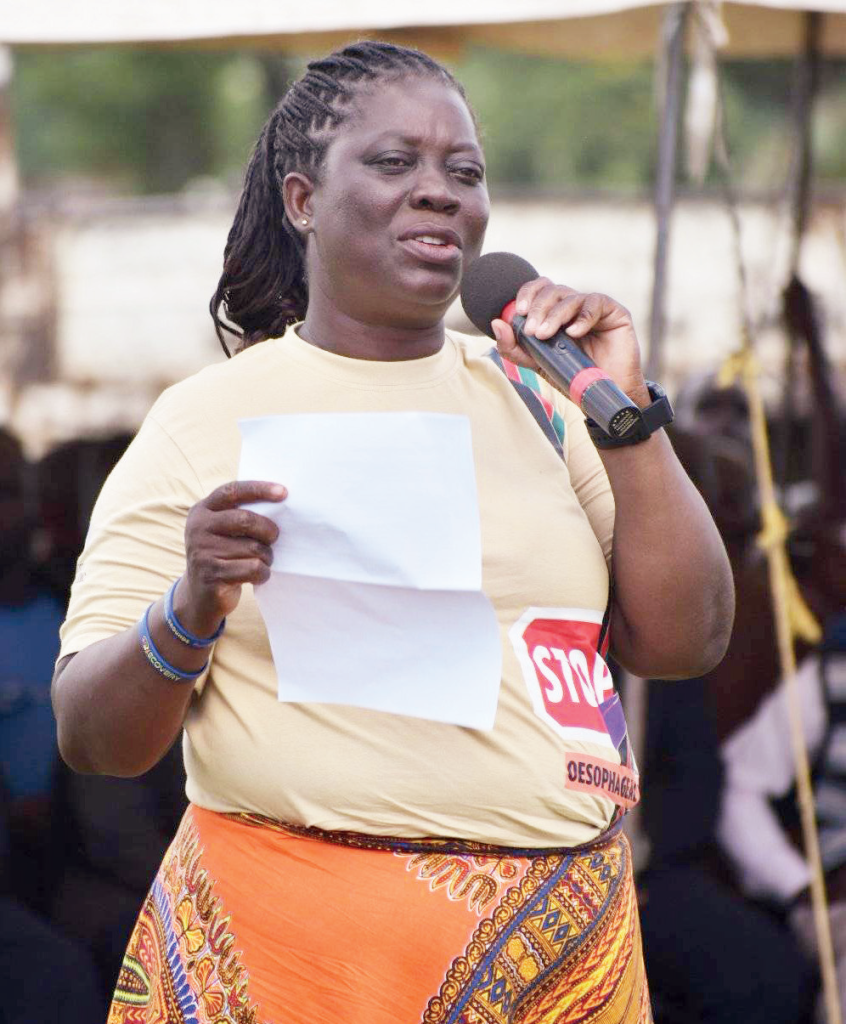
Salima. | Callisto Sekeleza
“Historically, esophageal cancer has been viewed through the lens of cultural beliefs,” she said. “Many people in Malawi refer to the disease as a lock on the throat and others speak of a frog magically placed in someone’s throat.”
Cancer of the throat prevents individuals from eating, leading to health deterioration.
Malawi has the highest esophageal cancer cases in East Africa, shows a joint study conducted by Afrecc and UNC Project-Malawi from 2020 to 2022.
It is the country’s second leading cause of cancer-related deaths, trailing cervical cancer.
However, esophageal cancer is rarely discussed, often overshadowed by traditional beliefs.
According to the World Health Organisation (WHO), diets that are low in fruits, vegetables and crucial micronutrients such as zinc and selenium increase the risk of cancer of the throat.
Other risk factors include obesity and conditions like gastroesophageal reflux disorder, a chronic digestive disorder where stomach acid frequently flows back into the throat, causing heartburn and other damaging complications
Consuming excessively hot liquids—over 65 degrees Celcius)—raises the risk.
In Nkhoma and Khombedza areas, the incidence rates are alarmingly high.
“About 300 cases have been reported in these high-risk areas, with nearly all patients succumbing within three months after diagnosis,” says Dr Shiraz Khan, a pathologist and researcher of esophageal cancer at UNC Project Malawi.
According to the pathologist, late detection significantly complicates treatment options, increasing the risk of death.
“When detected early, however, there is a much better chance of recovery,” Khan stated.
However, a new study is underway to improve early detection of esophageal cancer in the country.
Afrecc founder David Fleischer terms it the world’s first non-traditional screening study on this issue.
“This study is crucial for preventing esophageal cancer before it’s too late,” he says.
The innovation involves a tethered ‘capsule’ that patients can swallow to collect cell samples from the throat in just 10 minutes.
The method is akin to swallowing a tagged tea bag, the researchers say.
It presents a less invasive means of detection as it eliminates the need for traditional tube-based endoscopies, the team states.
The procedure reduces recovery times and patients do not need any sedation.
It also increases accessibility to cancer screening in various settings.
During the community outreach, Carl Budge, leader of Boston Scientific’s Africa outreach programme, said the new approach has the potential to revolutionise early detection in regions with high rates of esophageal cancer.
“Our commitment lies in developing advanced tools for cancer prevention and diagnosis,” he said.
Malawi is one of the Rift Valley countries where scientists have observed high rates of esophageal cancer.
“We came here because our partners were well-organised,” said Budge.
Chombo said Malawi should be proud to be the first country to have this quick screening method.
During the community awareness event in Salima, Senior Chief Khombedza said that the witchcraft suspicions cause delays to go for screening and treatment.
He urged the people to ignore the age-old belief that cancer of the throat is caused by people with ill intention, leaving the afflicted people unable to eat until they starve to death.
After the talk, the traditional leader told the crowd: “We are glad to have learnt from medical experts that what we had always believed to be witchcraft could be cases of esophageal cancer.”
He encouraged them to seek medical help when they encounter symptoms outlined by health experts.
As awareness grows and innovative solutions emerge, there is hope that tackling the myths and misconceptions could clear the way for early detection and treatment, improving outcomes for patients nationwide.